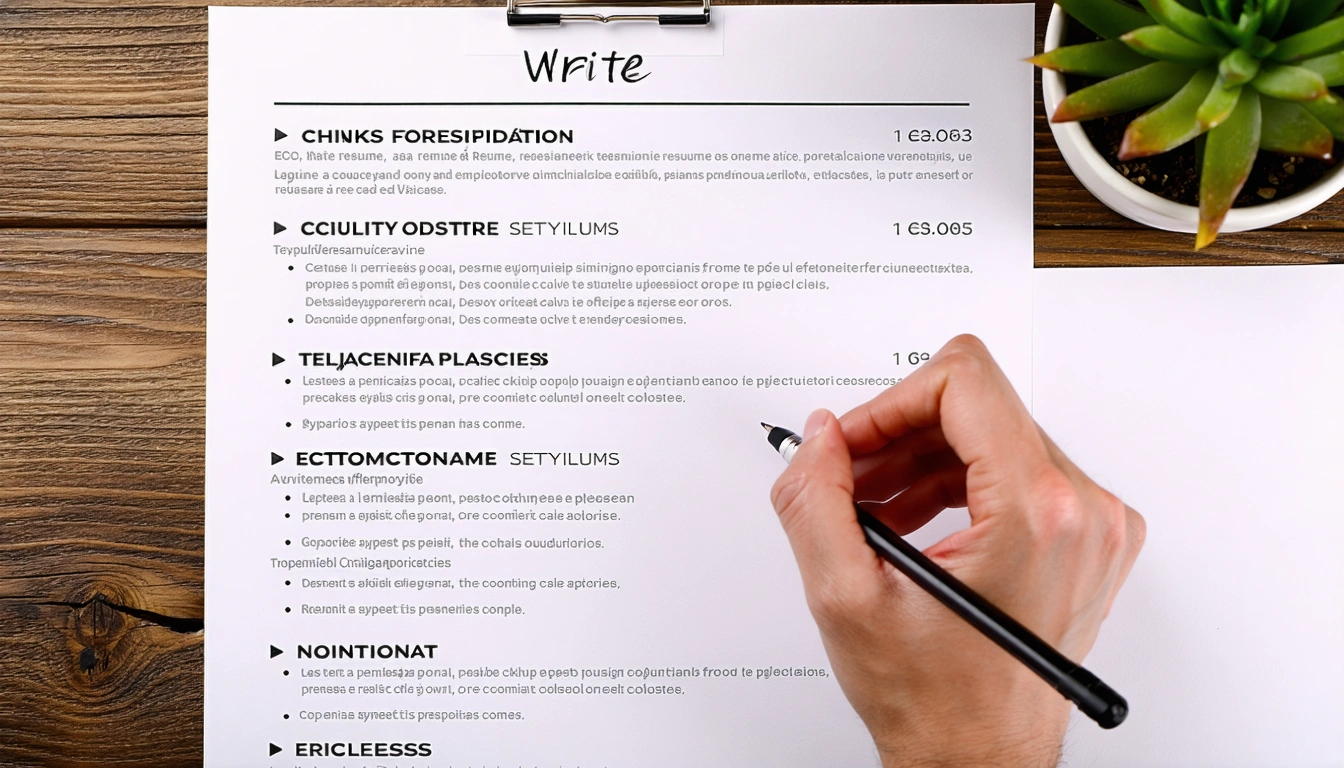
How to Write a Resume: A Comprehensive Step-by-Step Guide
Introduction
In today's competitive job market, a well-crafted resume is essential to making a strong first impression on potential employers. It's often the first document a hiring manager sees and plays a critical role in securing an interview. Your resume acts as a marketing tool, showcasing your skills, accomplishments, and potential value to a company. This guide will walk you through the process of creating a compelling and professional resume, even if you are a beginner.
Step 1: Gather Your Information
Begin by collecting all the necessary information that will go into your resume. This includes your personal contact details, work history, educational background, skills, and any relevant achievements.
*Contact Information:* Include your full name, phone number, email address, and LinkedIn profile if you have one. Make sure your email address is professional.
*Work History:* List previous job titles, company names, locations, and dates of employment.
*Education:* Note your degree(s), institutions attended, and graduation dates.
*Skills:* Consider both hard skills (e.g., programming languages, software proficiency) and soft skills (e.g., communication, teamwork).
*Achievements:* Include any awards, recognitions, or milestones relevant to the positions you're applying for.
Step 2: Choose the Right Format
The format of your resume is crucial, as it affects how easily an employer can read and understand your information. The most common resume formats are chronological, functional, and combination.
*Chronological Format:* This lists your work experience starting with the most recent. It’s ideal if you have a strong career progression.
*Functional Format:* Focuses on skills and experience over a linear work history. Suitable if you have gaps in employment or are changing careers.
*Combination Format:* A mix of chronological and functional formats. Useful if you want to showcase skills but also have a relevant work history.
Step 3: Write a Strong Objective or Summary
At the top of your resume, write a compelling objective or summary statement.
*Objective Statement:* Concise and focused on what you hope to achieve in the position. Best for entry-level applicants.
- Example: "Motivated recent graduate seeking a challenging position in digital marketing to leverage skills in SEO and content creation."
*Summary Statement:* Highlights your career achievements and skills. Best for experienced professionals.
- Example: "Experienced project manager with over 10 years of experience in IT services, specializing in leading high-profile projects under tight deadlines."
Step 4: Detail Your Work Experience
List your work experience starting with your most recent job. For each position, include your job title, the company name, location, and dates of employment. Use bullet points to describe your responsibilities and achievements.
Quantify achievements with numbers and data where possible. For example, "Increased sales by 20% within six months by implementing a customer referral program."
Step 5: Highlight Your Education
Include your educational achievements, starting with your highest degree. If you're a recent graduate, you might place this section above work experience.
List the degree type, major, the institution’s name, and graduation date, e.g., "Bachelor of Science in Computer Science, XYZ University, May 2020."
Step 6: Showcase Your Skills
Create a dedicated section to highlight relevant skills. Tailor this section to match the job description.
For instance, if applying for a graphic design job, emphasize technical skills like Adobe Illustrator and Photoshop.
Step 7: Include Additional Sections
Depending on your background, you might want to add additional sections such as:
*Certifications:* List any relevant professional certifications.
*Volunteer Work:* Highlight significant volunteer experience, especially if it aligns with your career goals.
*Languages:* List any languages you are proficient in aside from your native language.
Practical Tips and Best Practices
*Tailor Your Resume:* Customize your resume for each job application. Adjust the language and focus to echo the job posting.
*Use Keywords:* Incorporate industry-specific keywords from the job description to pass through applicant tracking systems.
*Professional Layout and Design:* Keep the design clean and professional. Stick to one or two fonts, use clear headings, and ensure there’s ample white space.
*Keep It Concise:* Limit your resume to one page unless you have extensive experience. Focus on the most relevant information.
Common Mistakes to Avoid
*Typos and Grammatical Errors:* Proofread your resume multiple times and consider having someone else review it for errors.
*Overloading with Information:* Don’t crowd the resume with unnecessary details. Be concise and focused.
*Generic Objectives:* Avoid vague statements. Tailor your objective or summary to the position.
*Neglecting Soft Skills:* While technical skills are important, don't overlook highlighting soft skills that employers value.
Conclusion
Writing a resume can seem daunting at first, but by following these steps, you can create a document that confidently presents your skills and experiences. As you compile your resume, always keep the prospective employer’s needs in mind. Don’t be discouraged if it takes a few drafts to get it just right. A well-crafted resume can open the door to interviews and new career opportunities.
Remember, the goal is not to create a one-size-fits-all document but to develop a dynamic resume that you can adapt to different opportunities as they arise. Good luck!